

Systems Architectures
The Systems Architectures Division has the overall responsibility for end-to-end systems engineering, systems architecture development, analysis and implementation for new and existing space missions – performed either internally (“in house”) or in conjunction with Other Government Agencies/industry partners (“out-of-house”). This systems level engineering approach utilizes all the traditional processes, such as requirements flow down from level 2, systems analysis and verification, integrated modeling and simulation, and systems budgeting, but in addition includes providing leadership in technology development road mapping and other elements of the strategic planning process. The Division provides expertise in software systems engineering, secure environments, and the software product development lifecycle to ensure the delivery of reliable software and information systems solutions.
The Division is responsible for the engineering of a full range of software and information systems throughout all phases (formulation through on-orbit operations) of NASA programs and projects. These systems include flight and ground data software for spacecraft monitoring, control, on-orbit performance management and operations, spacecraft data processing and analysis, and information management. The work focuses on the development of reusable flight and ground architectures and frameworks to reduce mission cost, decrease development time, minimize customer risk, and increase the overall value of information products.

In-Space Servicing, Assembly, and Manufacturing (ISAM) Capabilities
The ISAM Capabilities Office is responsible for developing and leveraging engineering capabilities that reduce risk and cost for NASA, national, and commercial endeavors by enabling flexible, resilient, and adaptable robotic architectures that strengthen American leadership in space. The office is a key enabler of sustainable lunar operations, Mars exploration, and commercial space growth, advancing U.S. economic competitiveness and reducing reliance on launching fully integrated systems from Earth.
To achieve these objectives, the office:
- Leads and manages Agency and Center ISAM initiatives and activities, ensuring alignment of resources, objectives, and technology development across NASA.
- Advances U.S. leadership in robotic servicing, assembly, and manufacturing through a robust technology development campaign conducted on the ground, in the air, and on orbit.
- Coordinates with American industry, academia, and international partners, expanding opportunities for U.S. companies and strengthening strategic partnerships.
- Transfers and infuses technology, accelerating innovation and ensuring that government and commercial users benefit from NASA-developed capabilities.
- Provides intellectual stewardship by supporting policy and regulation development, standards coordination, and technical consultations that protect and promote U.S. leadership in space.
- Manages early-stage innovation by maturing low-TRL technologies, advancing concepts through study, pre-formulation, and formulation phases, and enabling incorporation into missions and experiments.
- Oversees development infrastructure by managing ground-based facilities, research opportunities, small business innovation initiatives (SBIR), announcements of opportunity (AOs), and data calls.

Exploration Systems
The Exploration Systems Office is responsible for advancing end-to-end human exploration architectures, strategies, and mission support that enable safe, sustainable, and cost-effective crewed and uncrewed exploration. The office integrates human factors, crew systems, and applied science into exploration designs, ensuring that vehicles, habitats, and systems are engineered to meet the demands of astronauts and robotic precursors alike. As a key contributor to NASA’s Moon to Mars campaign, the CIS translates Agency objectives into operational capabilities, architectures, and mission elements that support both human and robotic exploration through strategic commercialization, innovation partnerships, and synergistic collaborations.
To achieve these objectives, the office:
- Leads and manages Agency and Center exploration initiatives and activities, providing project management leadership and subject matter expertise to identify collaborative opportunities with private industry, other government agencies, and international partners while aligning resources, objectives, and technology development to advance human exploration priorities
- Serves as a systems integrator for discipline engineering, including thermal, mechanical, avionics, and flight software, leveraging diverse relationships and partnerships to implement collaborative solutions that enhance these capabilities across crewed and uncrewed systems.
- Advances human exploration architectures through studies, assessments, and integration activities addressing feasibility, technology gaps, risk mitigation, and human system integration, while extending invitations to industry and academic partners to contribute innovative solutions.
- Integrates human factors and crew systems into mission design, ensuring astronaut performance, safety, and mission effectiveness in deep space environments through collaborative partnerships and shared expertise.
- Coordinates across programs, nurturing diverse relationships and implementing collaborative solutions by engaging with industry, academia, and international partners to strengthen human and robotic exploration outcomes.
- Provides intellectual stewardship by supporting policy development, standards coordination, technical consultations, and cross-cutting integration of science and technology into human exploration planning, while identifying opportunities for synergistic partnerships.
- Manages early-stage innovation by advancing exploration concepts through study, pre-formulation, and formulation phases, leveraging commercialization opportunities and industry partnerships to enable infusion into crewed and uncrewed mission architectures.
- Oversees development infrastructure including mission modeling tools, ground-based testbeds, and analysis frameworks to support human and robotic system design, verification, and integration through collaborative partnerships and shared capabilities across diverse stakeholders.
Software Systems Engineering & Operations
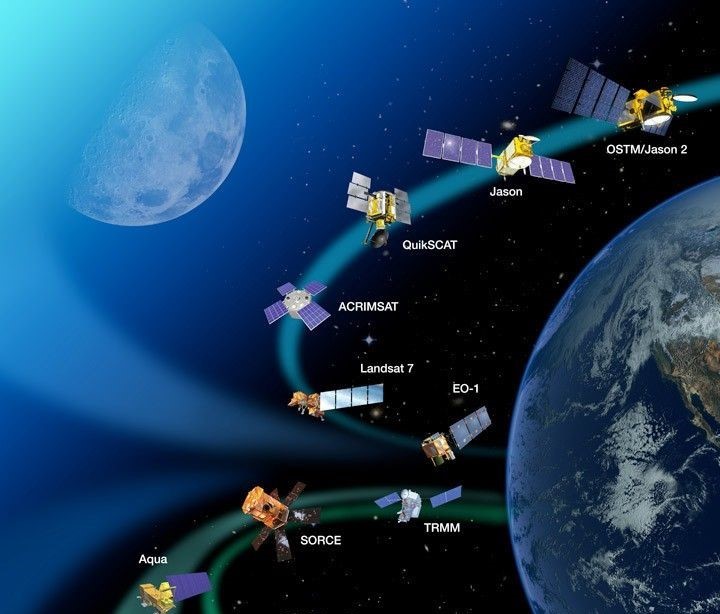
The Software Systems Engineering and Operations branch provides end-to-end software systems engineering for the development and the support of conceptual design, requirements specification, implementation and maintenance of software systems that enable current and future NASA missions, programs, and projects. Branch personnel represent expertise in all aspects of information, communication and technology software systems from flight and ground software components to data systems and management. Branch personnel plan, coordinate, and lead the end-to-end development of such systems.
The branch provides expertise in operations engineering, operations planning and systems validation to ensure optimal operability of information systems. In support of Agency Missions, the Branch develops and analyzes operational concepts, requirements, plans, schedules and documentation for planning, conducting, and evaluating spacecraft operations. Branch personnel plan, coordinate, and take responsibility for the end-to-end testing of mission systems. Pre-launch end-to-end simulations of launch and early orbit scenarios are developed, coordinated, and tested by this Branch to ensure launch readiness of ground and flight systems. Branch personnel direct the mission Flight Operations Teams in preparation and training for launch, in- orbit checkout and daily mission operations. Branch personnel prepare and define budgets and schedules for operations functions. The Branch works closely with other Center personnel, other NASA Centers, and contractor personnel to assure compatibility of performance, interfaces, schedules and budgets.
The branch provides leadership within the Integrated Design Center (IDC) to enable scientists and engineers in the exploration of new design concepts for proposed space systems and missions, remote sensing instruments and advanced technology applications. This facility promotes rapid development and efficient trade studies through end-to-end simulations and analysis, such as functional systems concepts, system requirements, risk, and cost studies. The Branch also provides expertise for trade studies, technical reviews, engineering insight, and working group activities.
Formulation and conceptual design of future missions represent one of the core activities of the Branch, and Branch personnel actively lead and participate in collaborative proposals with other Goddard branches, Divisions and Directorates and with external partners (other NASA Centers, universities, or industry).
Space Situational Awareness & Navigation
The Space Situation Awareness and Navigation Branch is responsible for providing navigation and trajectory design expertise to flight projects and technology development efforts. Flight project support responsibilities include orbit design studies for mission concept development; analysis of orbit determination and control requirements; development of ground systems for flight dynamics product generation; and on-orbit orbit determination and orbit control. The Branch provides many of its operations support services and products through its multi-mission Flight Dynamics Facility. New approaches and technologies for spacecraft navigation and orbit control are developed in the Branch.
This includes analysis of autonomous systems for navigation (flight and ground systems), new trajectory optimization techniques, and advanced modeling of orbit errors. The Branch creates and maintains state-of-the-art analysis tools for mission design, orbit analysis, and navigation analysis.
Systems Engineering
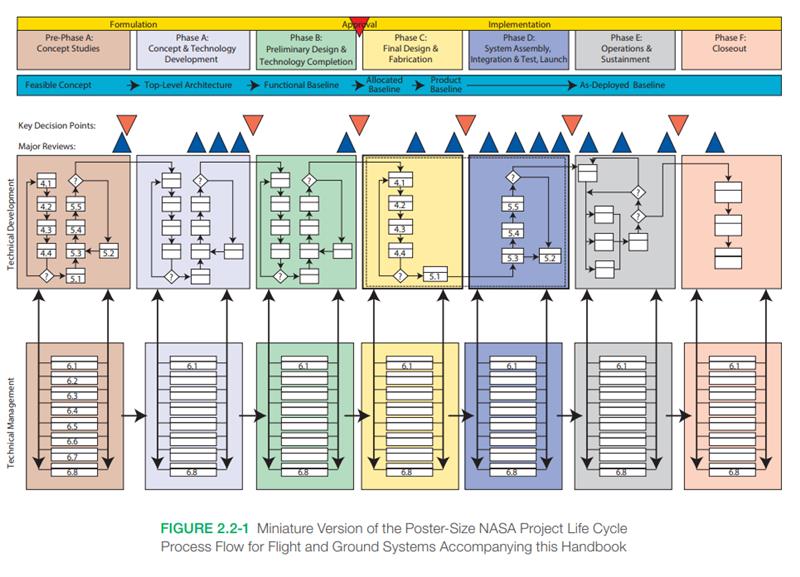
The Systems Engineering Branch provides technical leadership of end-to-end systems engineering for missions, instruments/payloads, and/or other flight elements that span the entire life cycle from concepts definition through implementation. Branch services include mission concept development; mission architecture development; preliminary and advanced instrument/payload design and analysis; proposal development including development of innovative new measurement concepts and techniques; instrument/payload integration and testing; operations support; engineering support for requirements and risk management; and risk mitigation and anomaly resolution strategies. The Branch provides technical leadership for all flight system elements over the project lifecycle, which includes responsibility for advanced design and proposal development including the development of innovative new measurement concepts and techniques, preliminary and detailed design and analysis, integration and testing, and support to Operations.
The Branch collaborates with internal and external customers/stakeholders to provide appropriate instrument-enabling activities that are responsive to Agency strategic initiatives. The Branch conceives, plans, implements, and conducts technology programs to meet current and future mission needs. The Branch provides advanced systems engineering services, including development of systems engineering tools and interdisciplinary tool sets, such as Integrated Modeling and Model Based Systems Engineering; development and deployment of collaborative environments and capabilities; and development of advanced engineering environments including provision of concurrent design and simulation capabilities.
Flight & Ground Software Systems
The Flight and Ground Software Systems Branch provides on-board, embedded software products that enable spacecraft hardware, instruments, and flight components to operate as an integrated on-orbit observatory. This includes flight software and associated high fidelity simulation test systems. Branch personnel provide life-cycle flight software engineering, including early mission formulations and designs, requirements analysis, development, verification and validation, and mission-life sustaining engineering. Flight software leadership strives for effective advancements in flight hardware and software architectures, operations ground/flight interfaces, onboard autonomy, onboard data analysis and testbeds. Flight software prototypes are implemented as proofs-of- concept for future missions. Formalized reuse of flight software products plus the utilization of Standards and commercially available products reduces flight program complexities, risks, costs and schedules.
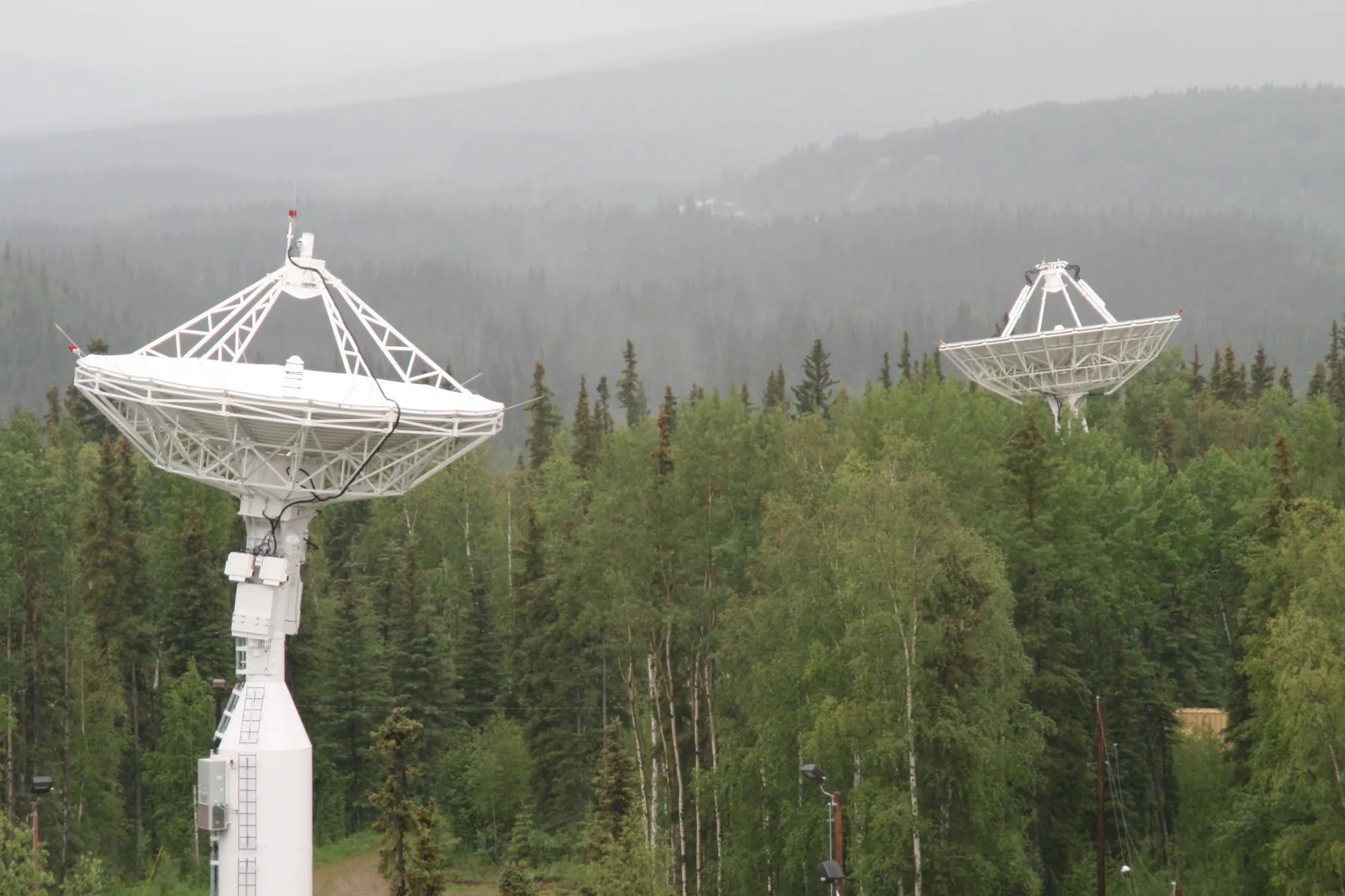
The Branch provides software products and expertise that satisfy ground system requirements for Agency missions. Branch personnel perform requirements analysis, design, implementation, verification, validation, deployment and sustaining engineering for all types of ground software applications and architectures. System functionality may include spacecraft command and control, flight dynamics, mission planning and scheduling, event monitoring and assessment, and telemetry trend analysis. Branch personnel also investigate and apply state-of-the-art technologies and commercially available products to ensure cost effective solutions that optimally meet customer needs.
Integrated Data Systems
The Integrated Data Systems Branch is responsible for the specification, design, development, installation, validation, modification, and operation of data systems for the acquisition, production, and distribution of data products that support NASA mission requirements. These systems may range in complexity from those that handle single, small instrument data streams with a limited user community to multi- mission data systems serving diverse multidisciplinary user communities. The Branch supports all aspects of the data management life-cycle which includes: processing systems, archives, distribution systems, networking, query systems, and user interfaces. Branch personnel have expertise in metadata definition, data formats, mass storage technologies, cost modeling, and contract management. In addition, the Branch supports new and evolving data system concepts, such as virtual data systems, grid computing, distributed archives, data workflows, visual data queries, and data modeling.
The Branch is responsible for the design, development, implementation and integration of data processing applications and data processing technology for flight, in-situ and ground-based systems. The Branch supports all phases of instrument, spacecraft, and mission development – from concept through post- mission analysis.
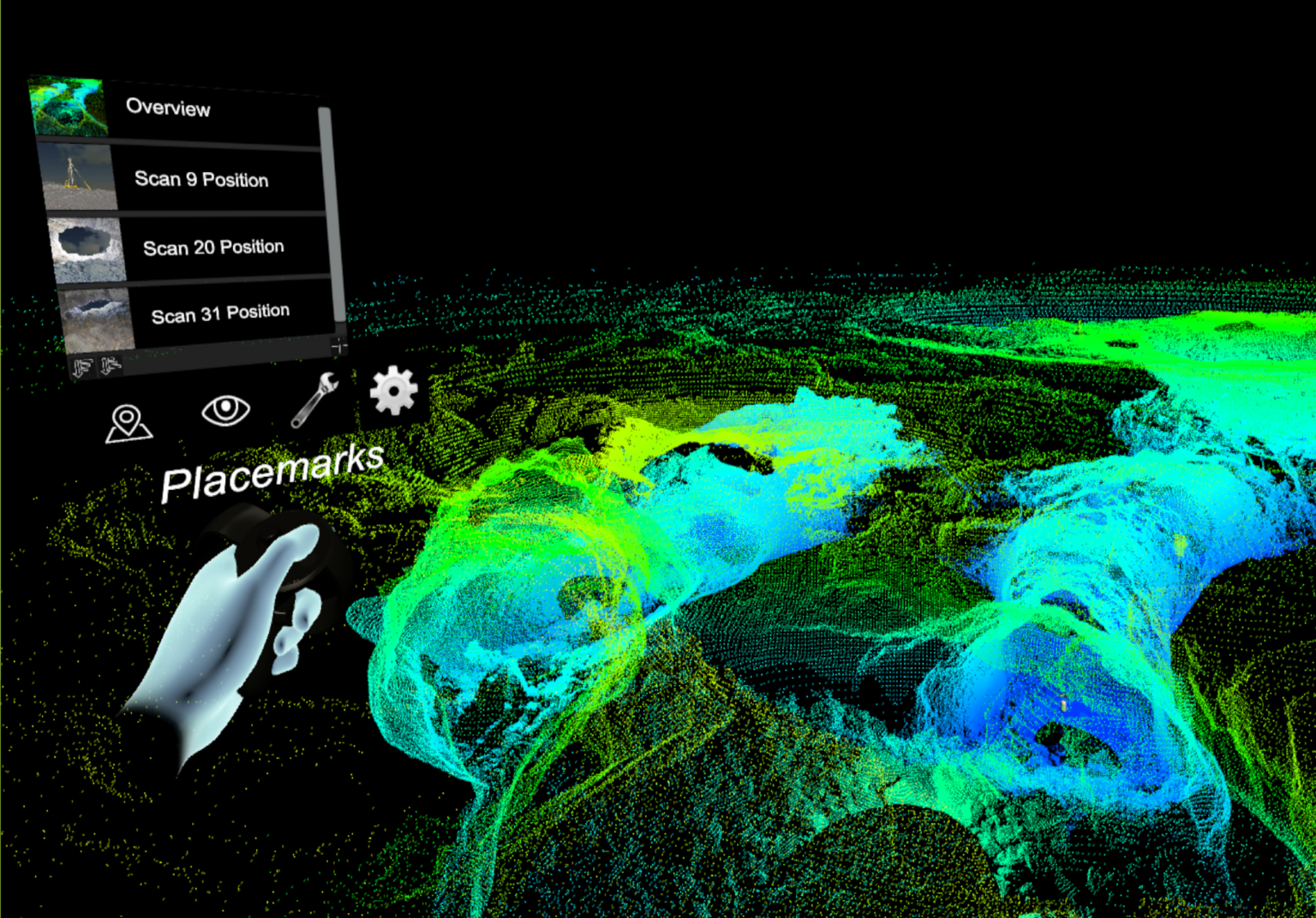
Areas of expertise include embedded data processing, modeling/simulation, data visualization, image/sensor data processing, sensor webs, application architectures/frameworks, automation, intelligent agents, algorithm development, data compression, distributed systems, data mining, human-computer interaction, information fusion and the development of data analysis tools.