
• Skip to main content
  • Skip to header right navigation
  • Skip to after header navigation
  • Skip to site footer

Due to the lapse in federal government funding, NASA is not updating this website.

NASA classic meatball logo with the text Goddard Engineering and Technology Directorate.

Goddard Engineering and Technology Directorate

  • About ETD
    • About ETD
    • Key Personnel
    • Images
    • Multimedia
    • Featured Stories
  • Capabilities
    • ETD Capabilities
    • Capabilities Listing
    • Facilities Listing
    • core Flight System
    • Flight Dynamics Facility
    • Integrated Design Center
    • In-Space Servicing, Assembly, and Manufacturing
  • Partnerships
  • Our Work
  • Divisions
    • Wallops Engineering Office (WEO)
      • WEO Branches
    • Mechanical Systems Division (MSD)
      • MSD Branches
    • Instrument Systems & Technology Division (ISTD)
      • ISTD Branches
    • Electrical Engineering Division (EED)
      • EED Branches
    • Software Engineering Division (SED)
      • SED Branches
    • Mission Engineering & System Analysis (MESA)
      • MESA Branches
  • Careers
    • Internships

  • Our Work
  • Our Work Home
  • Contact ETD

BurstCube

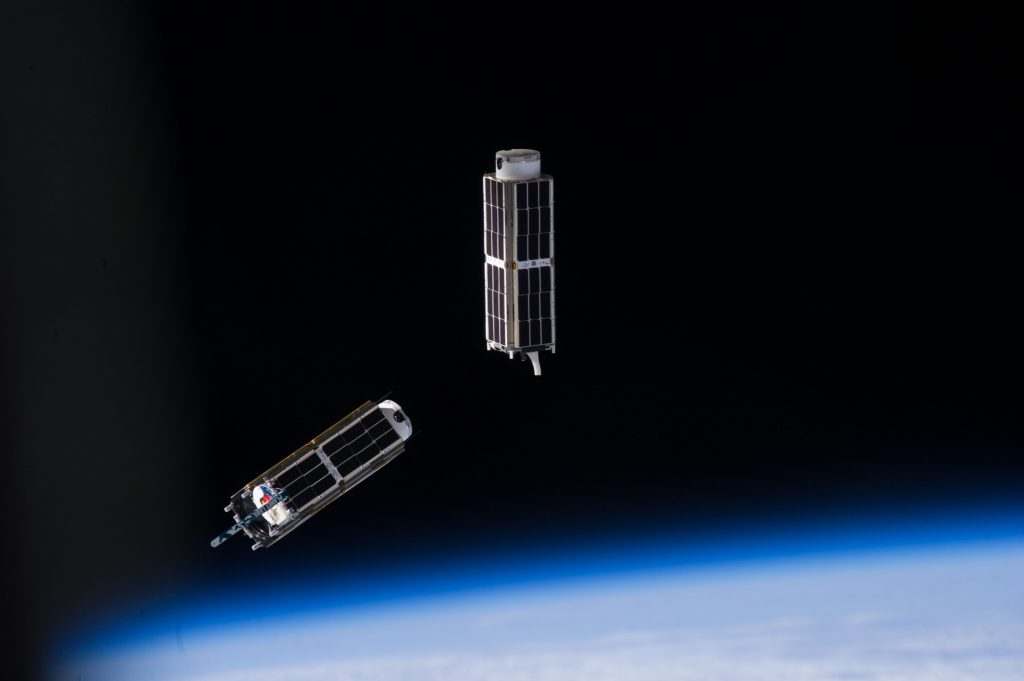
Three-unit (3U) CubeSats orbit above the Earth.
Three-unit (3U) CubeSats. At about a foot in length and four inches wide, these are similar in design to IceCube and the five selected heliophysics CubeSats. Credits: NASA

BurstCube is a 6U CubeSat project that is designed to automatically detect gamma-ray transients onboard (astrophysical, solar, and terrestrial) while sending rapid alerts to the ground to enable follow-up observations. BurstCube also increases the sky coverage for short, less than 2 second gamma-ray bursts (GRBs) which in recent years have been proven to be produced by binary neutron star mergers.

This satellite is also designed to detect solar flares, magnetar flares, and other hard X-ray transients and can provide all-sky coverage at a small fraction of the cost needed for an Explorer. Since BurstCube also provides localizations, follow-up observations can be made in afterglow detection and redshift measurement to provide insight into cosmological parameter estimation, onstraints on the neutron star equation of state, and an inventory of r-process elements in the Universe constrained by the faint short GRB kilonova signature.

Learn More

ABOUT ETD

The Engineering and Technology Directorate at NASA Goddard designs, builds, and develops space flight technology for American leadership in space. The technical workforce brings this expertise to NASA’s portfolio and supports mission partnerships across the whole of government and industry.

About ETD’s Mission

NASA.gov

NASA Goddard

News & Events

NASA+

EXPLORE ETD

Key Personnel

Featured Stories

Internships

EMPLOYEES

ETD Internal

ETD Town Hall

FOLLOW

  • X
  • Facebook
  • Flickr
  • YouTube
  • Instagram

More NASA Social Accounts


NASA classic meatball logo.

Page Last Updated: Apr 25, 2025

Page Editor: ETD Web Team

Responsible NASA Official: Hector Dietsch

Sitemap

FOIA

Privacy

Accessibility

Contact ETD