
cFS Events
PAST EVENT
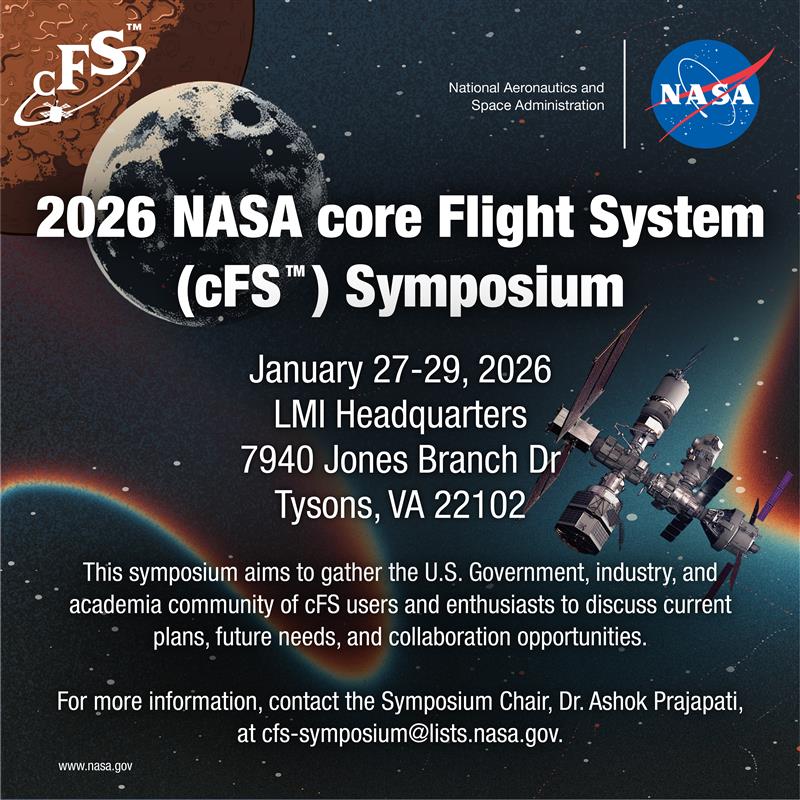
2026 NASA cFS Symposium
The 2026 NASA core Flight System (cFS) Symposium will bring together leading experts, innovators, and community members to explore and advance the development of cFS-based flight software. This year’s event focuses on “Secure cFS-Based Flight Software and the Community’s Role in Advancing cFS.”
Join us at LMI Headquarters for three days of inspiring keynote speeches, engaging panel discussions, individual presentations, and valuable networking opportunities. This symposium is thoughtfully designed to foster collaboration and innovation.
Your insights and expertise are vital to shaping the future of cFS, and we invite you to contribute to conversations that will drive the development of next-generation flight software solutions.
Objectives for the 2026 cFS Symposium are:
- Empower the cFS Community to Drive Innovation and Advancement
- Foster a Robust Ecosystem for cFS Adoption and Evolution
- Define the Future Roadmap for cFS Development
- Ensure Community-Driven Standards for Secure and Accessible Development
- Advance Technologies in Artificial Intelligence (AI), Machine Learning (ML), and Onboard Data Processing
Schedule:
DAY 1 (9:00AM to 5:00PM EST, January 27, 2026): Unclassified Presentations. Open to all attendees.
DAY 2 (9:00AM to 5:00PM EST, January 28, 2026): Controlled Unclassified Information (CUI) Presentations. Attendance limited to U.S. citizens.
DAY 3 (9:00AM to 4:30PM EST, January 29, 2026): Controlled Unclassified Information (CUI) Presentations. Attendance limited to U.S. citizens.
DAY 3 (9:00AM to 3:00PM EST, January 29, 2026): TS/SCI Session. Sessions Access will be limited and being held at Aerospace Corporation – Chantilly, VA.
Be part of this pivotal event as we cultivate collaboration, inspire innovation, and build pathways for the future of secure cFS-based flight software.
For questions, please contact cfs-symposium@lists.nasa.gov.
Dates: Jan 27-29, 2026
Cost: Attendance is free of charge, excluding Day 3 (TS/SCI) lunch cost
Venue: LMI Headquarters
7940 Jones Branch Drive, Tysons Corner, VA 22102
703-917-9800
Chair: Dr. Ashok Prajapati
NASA cFS Program Manager
Co-Chair: Romae Young
Associate Branch Head
Flight and Ground Software Systems Branch (Code 534)
Agenda
DAYS 1-3 Space Technology Showcase
| Company | Product | Point of Contact | Summary |
| Frontgrade | Space Avionics | Mark Beadle | Frontgrade is the largest provider of analog and radiation-hardened electronics for the aerospace, defense, and medical industries, we offer a broad portfolio of off-the-shelf and customizable radiofrequency, microwave, and high-reliability microelectronic products and subsystems — as well as complete solutions across the signal chain, from aperture to digital conversion. |
| LMI | Space Software Products | Tom McConnell | LMI delivers commercial-grade modeling & simulation, GenAI, RFID sensing, and DevSecOps platforms — including RAPTR, LIGER, SPECTR, and IronSled — that accelerate insight, decision-making, and operational impact for space mission architecture, logistics, and operations. |
| Microchip | HPSC processor & ecosystem products | Tao Lang | Microchip will present its radiation-hardened High-Performance Spaceflight Computing (HPSC) processors, which incorporate 64-bit octal-core architecture, TSN Ethernet switching, and edge AI processing capabilities. Additionally, Single Board Computers (SBCs) and On-Board Computer units currently in development by HPSC ecosystem partners will also be showcased. |
| MOOG | Space Avionics and SBC’s | Mark Broadbent | Moog is a leading industry provider of spacecraft avionics for bus and payload in all orbital regimes. Our products include heritage products for C&DH, payload processing/storage and motor controllers. Our newest technologies include GPU products and the development of our HPSC-based Cascade SBC. |
| NASA Langley | cFS-based Drone | Cuong Chi (Patrick) Quach, Cesar Munoz | At NASA’s Langley Research Center, cFS has been used in several flight projects involving autonomous operation of unmanned aircraft systems such as HERMES (Hermes Environment Risk Mitigation Executive System) and ICAROUSv2 (Independent Configurable Architecture for Reliable Operation of Unmanned Systems with Distributed Onboard Services). |
| Nextage | Space Avionics | Don Golding | Nextage provides Avionics and Aerospace Systems engineering services, software design, and automated test system development, resulting in accurate, reproducible, and efficient results to industry clients. In parallel, Nextage is leading development for new low-cost and highly reliable single-board computers for both spacecraft and terrestrial avionics. |
DAY 1 (9:00AM to 5:00PM EST, January 27, 2026): Unclassified Presentations. Open to all attendees.
| Start Time | Session Chair | Duration (Minutes) | Item | Person | Organization | Title |
| 8:00 AM | 60 | Check-in/Coffee | Registration Team | NASA/LMI | Check-in | |
| 9:00 AM | Session I: Chair – Dr. Ashok Prajapati (NASA Goddard) | 15 | Kick-off | Dr. Ashok Prajapati, cFS Program Manager | NASA Goddard | cFS Overview and Welcome |
| 9:15 AM | 10 | Welcome to LMI | Josh Wilson, LMI CEO | LMI | Welcome Address | |
| 9:25 AM | 15 | 26-cFSS-Key-01 | Segrid Harris, Director of Engineering & Technology | NASA Goddard | ETD Overview | |
| 9:40 AM | 10 | 26-cFSS-Key-02 | Dr. Jonny Pellish, Executive Lead for Partnerships | NASA Goddard | Strategic Partnership Remarks | |
| 9:50 AM | 25 | Coffee Break | Outside Snackbar | |||
| 10:15 AM | 15 | 26-cFSS-Key-03 | Dr. Julie Robinson, Deputy Director, Earth Science Division | NASA ESD/SMD | ||
| 10:30 AM | 15 | 26-cFSS-Key-04 | Mike Gross, Deputy Director for Engineering & Science | NASA JPL | JPL Missions | |
| 10:45 AM | 15 | 26-cFSS-Key-05 | Dr. Frank Rubio | NASA JSC | ||
| 11:00 AM | 60 | Networking with Leadership | ||||
| 12:00 PM | 60 | Lunch (BYOL) | ||||
| 1:00 PM | Session II: Chair – Brandon Bailey (Aerospace) | 30 | 26-cFSS-Reg-01 | Adrian Rodriguez | NASA Goddard | cFS Multithread Parallelization Capability |
| 1:30 PM | 30 | 26-cFSS-Reg-02 | Dr. Ivan Perez | NASA ARC | From MBSE to formally verified flight applications in cFS | |
| 2:00 PM | 30 | 26-cFSS-Reg-03 | Ryan Goodman | Ten One Space | Accelerating cFS Validation: A Non-Intrusive Framework for Faster-Than-Real-Time Security and AI Testing | |
| 2:30 PM | 45 | 26-cFSS-Panel-01 | Panel Chair: Mark Walters Panel: Alex Schoening, Dave McComas, Mike Blau, Elaine Shell | NASA cFS Lessons Learned | ||
| 3:15 PM | 15 | Coffee Break | Outside Snackbar | |||
| 3:30 PM | 30 | 26-cFSS-Reg-04 | Dr. Robert L. Bocchino Jr. | NASA JPL | Bringing Software Modeling to cFS | |
| 4:00 PM | 40 | 26-cFSS-Reg-05 | Tao Lang | Microchip | Secure Flight Software and Space Computing with HPSC | |
| 4:40 PM | 20 | 26-cFSS-Reg-06 | Thomas Bailey | Riverside Research | Drone-ing on about Secure Parsing: Keeping Bad Input Grounded | |
| 5:00 PM | 5 | Closing Remarks | Dr. Ashok Prajapati, Tom McConnell | |||
| 5:30 PM | 3 Hours | Happy Hour |
DAY 2 (9:00AM to 5:00PM EST, January 28, 2026): Controlled Unclassified Information (CUI) Presentations. Attendance limited to U.S. citizens.
| Start Time | Session Chair | Duration (Minutes) | Item | Person | Organization | Title |
| 8:00 AM | 55 | Check-in/Coffee | Registration Team | NASA/LMI | Check-in | |
| 8:55 AM | 1 | Day of Remembrance | All | All | ||
| 8:56 AM | Session I: Chair – Kenneth Wagner | 4 | Day 2 Kick-off | Dr. Ashok Prajapati, cFS Program Manager | NASA Goddard | |
| 9:00 AM | 15 | 26-cFSS-Key-06 | Dr. Joe Hill-Kittle, Executive for Center Development | NASA Goddard | ||
| 9:15 AM | 15 | 26-cFSS-Key-07 | David Rutishauser, Domain Formulation Lead | NASA JSC | ||
| 9:30 AM | 15 | 26-cFSS-Key-08 | Dr. Bhanu Sood, Chief Technologist | NASA Goddard | ||
| 9:45 AM | 15 | 26-cFSS-Key-09 | Dr. Mark A. Eddings, Sr. Vice President | LMI | ||
| 10:00 AM | 45 | Coffee Break | Outside Snackbar | |||
| 10:45 AM | 30 | 26-cFSS-Reg-07 | Eshwar Singh/Eric Pollack | NASA Goddard | Establishing the cFS Security Manager for Secure Application Messaging Across NASA’s Moon-to-Mars Missions | |
| 11:15 AM | 45 | 26-cFSS-Panel-02 | Panel Chair: Anthony Marchi Panel: James Curbo (APL), Terri Murphy, Joshua Krage, Kevin Gilbert (Aerospace) | Secure Flight Software | ||
| 12:00 PM | 60 | Lunch (BYOL) | ||||
| 1:00 PM | Session II: Chair – Anthony Marchi | 15 | Keynote | Casey Swails | NASA Headquarters | |
| 1:15 PM | 30 | 26-cFSS-Reg-08 | Cuong Chi (Patrick) Quach, Cesar Munoz | NASA LaRC | Development of Autonomous UAS Application Using the cFS Middleware | |
| 1:45 PM | 30 | 26-cFSS-Reg-09 | James Curbo | JHU/APL | Lessons Learned in Engineering and Evaluating Cyber Resilience for Flight Software | |
| 2:15 PM | 30 | 26-cFSS-Reg-10 | Kevin Payne | General Atomics | Leveraging Power Of Flight Software Frameworks | |
| 2:45 PM | 30 | 26-cFSS-Reg-11 | Brandon Bailey | Aerospace Corp. | Detection from the Inside: On-Board Cyber Monitoring for cFS | |
| 3:15 PM | 15 | Coffee Break | Outside Snackbar | |||
| 3:30 PM | 30 | 26-cFSS-Reg-12 | Jeffrey Wiemeri | SNL | Sandia WHIPTAIL update: how partners are leveraging space cyber resilience capabilities | |
| 4:00 PM | 30 | 26-cFSS-Reg-13 | Don Golding | NextAge | The Core I FPGA Architecture | |
| 4:30 PM | 30 | 26-cFSS-Reg-14 | David Swartwout | NASA JSC | core Flight System as the enabling architecture for NASA’s Gateway Lunar outpost | |
| 5:00 PM | 5 | Closing Remarks | Romae Young, Melanie Glenn | |||
| 5:30 PM | 3 Hours | Happy Hour |
DAY 3 (9:00AM to 4:30PM EST, January 29, 2026): Controlled Unclassified Information (CUI) Presentations. Attendance limited to U.S. citizens.
| Start Time | Session Chair | Duration (Minutes) | Item | Person | Organization | Title | |
| 8:00 AM | 55 | Check-in/Coffee | Registration Team | NASA/LMI | Check-in | ||
| 8:55 AM | Session I: Chair – Keegan Moore (NASA Goddard) | 5 | Day 3 Kick-off | Keegan Moore, cFS PDL | NASA Goddard | ||
| 9:00 AM | 30 | 26-cFSS-Reg-15 | David McComas | Open STEMware Foundation | cFS Basecamp’s App Store-based Educational Platform | ||
| 9:30 AM | 30 | 26-cFSS-Reg-16 | Sara Garcia-Beech | NASA Goddard | Delay/ Disruption Tolerant Networking in cFS | ||
| 10:00 AM | 30 | 26-cFSS-Reg-17 | Andrew Yeck | Lunar Outpost | cFS SB/SBN and Application Startup Performance on VxWorks 7 using Flight Representative Hardware | ||
| 10:30 AM | 30 | Coffee Break | Outside Snackbar | ||||
| 11:00 AM | 30 | 26-cFSS-Reg-18 | Hans Weggeman | Wind River | Real-Time Deployment and Simulation for the Cosmic Edge | ||
| 11:30 AM | 30 | 26-cFSS-Reg-19 | Elizabeth Geist | NASA Goddard | cFS Lessons Learned from CAPSTONE Experimentation | ||
| 12:00 AM | 60 | Lunch (BYOL) | |||||
| 1:00 PM | Session II: Chair – Dylan Baker (NASA Goddard) | 30 | 26-cFSS-Reg-20 | Brennan Hay/Dr. Joel Sherrill | NASA Goddard/OAR Corp. | The HPSC & Risk Mitigation Possibilities: RTEMS & Hypervisors | |
| 1:30 PM | 30 | 26-cFSS-Reg-21 | Mark Broadbent | MOOG | Cascade SBC with Microchip PIC-64 for IEEE 802.1DP TSN Ethernet | ||
| 2:00 PM | 30 | 26-cFSS-Reg-22 | Rich Landau | JHU/APL | Best of Both Worlds: A Unified Flight Software Stack for Control & Compute | ||
| 2:30 PM | 30 | 26-cFSS-Reg-23 | Thomas Sandholm | RISE | LeoDOS: a Distributed Operating System for LEO mega-constellations | ||
| 3:00 PM | 30 | Coffee Break | Outside Snackbar | ||||
| 3:30 PM | 30 | 26-cFSS-Reg-24 | Brandon Lien | QNX | Microkernel Assurance for Modern Space Systems: An Embedded RTOS for High-Assurance, Real-Time Multi-Core Space Applications | ||
| 4:00 PM | 30 | 26-cFSS-Reg-25 | Annie Dai | University of Maryland | Don’t look up: There are sensitive internal links in the clear on GEO satellites | ||
| 4:30 PM | 5 | Closing Remarks | Dylan Baker, Tom McConnell |
DAY 3 (9:00AM to 3:00PM EST, January 29, 2026): TS/SCI Session. Sessions Access will be limited and being held at Aerospace Corporation – Chantilly, VA.
Please reach out to cfs-symposium@lists.nasa.gov for any questions.
Keynote Speakers
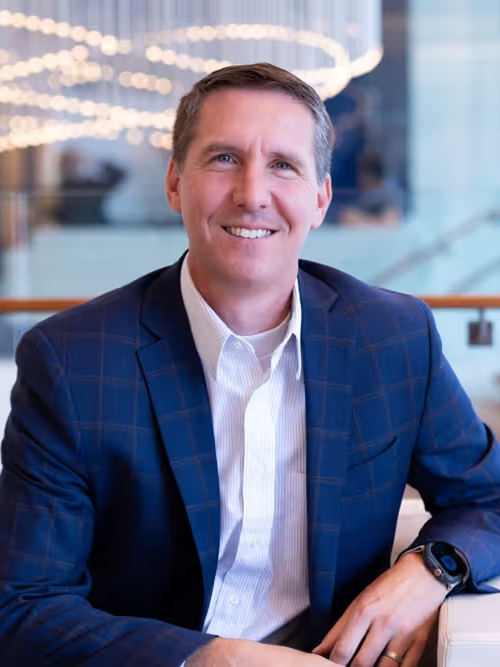
Dr. Mark A. Eddings
Senior Vice President of LMI’s Space Market
Mark Eddings serves as senior vice president of LMI’s space market, overseeing all aspects of the market’s growth, strategy, execution, and delivery. With extensive expertise in the national security space industry, Mark fosters continued market expansion while bolstering LMI’s rapid innovation in support of customer requirements.
Prior to joining LMI, Mark served as the technical director for the Space Security and Defense Program (SSDP) in the role of the primary technical advisor to the director of SSDP, where he was directly involved in shaping national space policy, requirements, and budget recommendations regarding military and commercial space security. Prior to this position, he led a team in the development of the United States Space Force (USSF) space control force designs. These force designs received formal validation from the Joint Staff Requirements Council and were presented in table-top exercises, wargames, and other forums to leaders throughout the government, including Congress and the Vice President. The force designs created by Mark and his team have resulted in over $10 billion of new capabilities and resiliency improvements to national security space systems since 2014.
Upon earning a bachelor’s in mechanical engineering and a doctorate in bioengineering from the University of Utah Mark furthered his education and experience in biotech working for the Crump Institute for Molecular Imaging at UCLA. Following his time at UCLA, Mark transitioned to government service in Los Angeles, managing studies and research and develop programs in space control and protected satellite communications. He continued his efforts as an Air Force fellow at Oak Ridge National Laboratory, where he researched advanced manufacturing and carbon-based technologies for airborne and space-based platforms.
Prior to his fellowship, Mark worked in academia and industry, publishing over 15 peer-reviewed journal articles and conference proceedings and receiving three patents related to technologies he developed at the University of Utah and UCLA. The pharmaceutical industry uses these patents and resulting technologies to create tracers for positron emission tomography screening for various cancers and to screen monoclonal antibodies for therapeutic treatments for COVID-19 and other diseases.

Mike Gross
Deputy Director for Engineering & Science
NASA JPL
Michael Gross is currently the Deputy Director for Engineering and Science at NASA’s Jet Propulsion Laboratory (JPL), which provides mission end-to-end implementation and theoretical and experimental studies in Earth science, planetary science, astrophysics and engineering technology to inform future NASA missions.
Gross has over 30 years of experience at JPL and has held senior roles in line and project leadership in NASA’s Earth Science and Mars mission portfolios during his career. These roles have included the Mission Assurance Manager of the Gravity Recovery and Climate Experiment (GRACE), Deputy Mission Assurance Manager for the Mars Exploration Rovers Project, the Payload Manager for the Phoenix Mars Lander, The GRACE Follow-On Deputy Project Manager/Flight System Manager, Manager of the Autonomous Systems Division responsible for JPL’s development and advancement of robotics, avionics and flight software, GNC, and power systems, and most recently the GRACE Continuity Project Manager.
He holds a B.S and an M.S. in Electrical Engineering, from California State University, Northridge. He is a Senior Member of IEEE, Associate Fellow of AIAA, and a Corresponding Member of the International Academy of Astronautics. In addition, he serves on the International Academy of Astronautics Power Committee and the AIAA Space Systems Technical Committee.
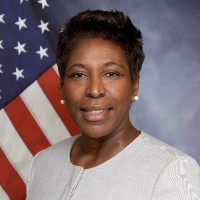
Segrid Harris
Director of Engineering & Technology
NASA Goddard
Segrid Harris serves as the Director of Engineering & Technology at NASA’s Goddard Space Flight Center (GSFC). Prior to this, Segrid served as the Senior Scientific Technical Manager (SSTM) for the Air Force Research Laboratory’s Munition Directorate. As SSTM, she led strategic R&D programs in the physical and engineering sciences spanning across the competencies of the Munitions Directorate. Additionally, as Deputy Director, Munitions Directorate, Air Force Research Laboratory, Air Force Materiel Command, Eglin Air Force Base (AFB), Florida, she directed a staff of more than 800 military, civilian and contractors developing air-launched conventional munitions technology. The Munitions Directorate leads the discovery, development and integration of affordable warfighting conventional air-launched weapon technologies for the U.S. Air Force. The activities of the Munitions Directorate include research on missile seekers, guidance, navigation and control (GNC), image processing, munitions integration, warheads, fuzing, energetics and technology assessment methodology.
Segrid entered Civil Service in May 1984 through the Federal Junior Fellowship program at Robins Air Force Base, Georgia, and has over 30 years of engineering, logistics, and supply chain experience in research and development, acquisition and sustainment. She has held leadership positions throughout the Department of Air Force in multiple geographic locations.
Prior to her role as the Senior Scientific Technical Manager (SSTM) for the Air Force Research Laboratory’s Munition Directorate, Segrid was Chief, Ordnance Division, Munitions Directorate, Air Force Research Laboratory, Air Force Materiel Command, Eglin Air Force Base, Florida. She led a team of 250 scientists, engineers, technicians and logisticians in the development, integration, and transition of air-to-air and air-to-surface ordnance technologies (energetic/explosive materials, fuze/initiation devices and warheads/damage mechanisms) for air-launched munitions.

Dr. Joe Hill-Kittle
Senior Executive for Center Development
NASA Goddard
Dr. Joanne (Joe) Hill-Kittle is NASA Goddard Space Flight Center’s Senior Executive for Center Development. She has been serving in this role since 2024. Prior to this she served as Deputy in the Safety and Mission Assurance Directorate as part of the Center senior leadership perspective exchange. She was appointed as the Deputy Director for Engineering and Technology Directorate (ETD) in 2021-2024 and as the Deputy Director of the Sciences and Exploration Directorate from 2019-2021.
Joe’s responsibilities include overseeing the ideation and development of new mission concepts, Internal Research and Development (IRAD) investments in new technologies and data analysis techniques and the creation of strategic partnerships with academia, industry and government agencies. Joe ensures this portfolio is executed to maximize the return on investment for the Agency and the Nation enabling transformative missions and instruments that will answer the far-reaching science questions to ensure U.S. leadership in space.
Earlier in her career Joe served as the Neil Gehrel’s Swift Observatory instrument scientist leading the development of the X-ray telescope through successful launch and commissioning in 2004 before moving to Universities Space Research Association onsite at NASA’s Goddard Space Flight Center to develop new cutting-edge instrumentation for high energy astrophysics. She received her Degree and Doctorate in physics and astrophysics instrumentation, from the University of Leicester in the United Kingdom.
In 2023 Joe received the Presidential Meritorious Rank Award for exceptional leadership integrity, and a relentless commitment to public service.
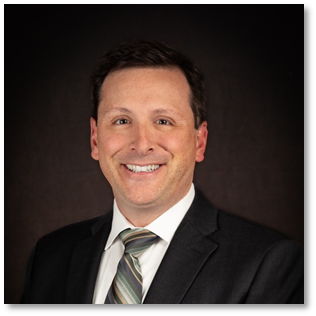
Dr. Jonny Pellish
Executive Lead for Strategic Partnerships
NASA Goddard
Since June 2024, Dr. Pellish has served as the NASA GSFC Senior Engineer – Microelectronics and the Executive Lead for Strategic Partnerships, actively engaging with other federal agencies to make more informed decisions, cooperate in scientific research, and pursue partnerships that further national interests. Prior to his current role, Jonny was assigned to the White House National Space Council as the Director of Civil Space Policy. While there, he was responsible for advising the Council’s Executive Secretary, the Vice President, and the President on development and implementation of national policies and strategies for space.
Before the National Space Council, Dr. Pellish served as a fellow on the U.S. Senate Committee on Commerce, Science, and Transportation to negotiate and pass the CHIPS and Science Act – which authorized federal research agencies and funded domestic semiconductor development and manufacturing. A NASA engineer since 2008, Jonny spent most of his career focused on radiation effects in microelectronics for space and strategic systems, leading numerous projects and agency-wide programs.
Dr. Pellish received a B.S. in physics, M.S. in electrical engineering, and Ph.D. in electrical engineering from Vanderbilt University. Jonny has authored or co-authored over 80 refereed publications and delivered numerous presentations on aerospace microelectronics and space policy topics. He is a senior member of the Institute of Electrical and Electronics Engineers and a member of the American Institute of Aeronautics and Astronautics.
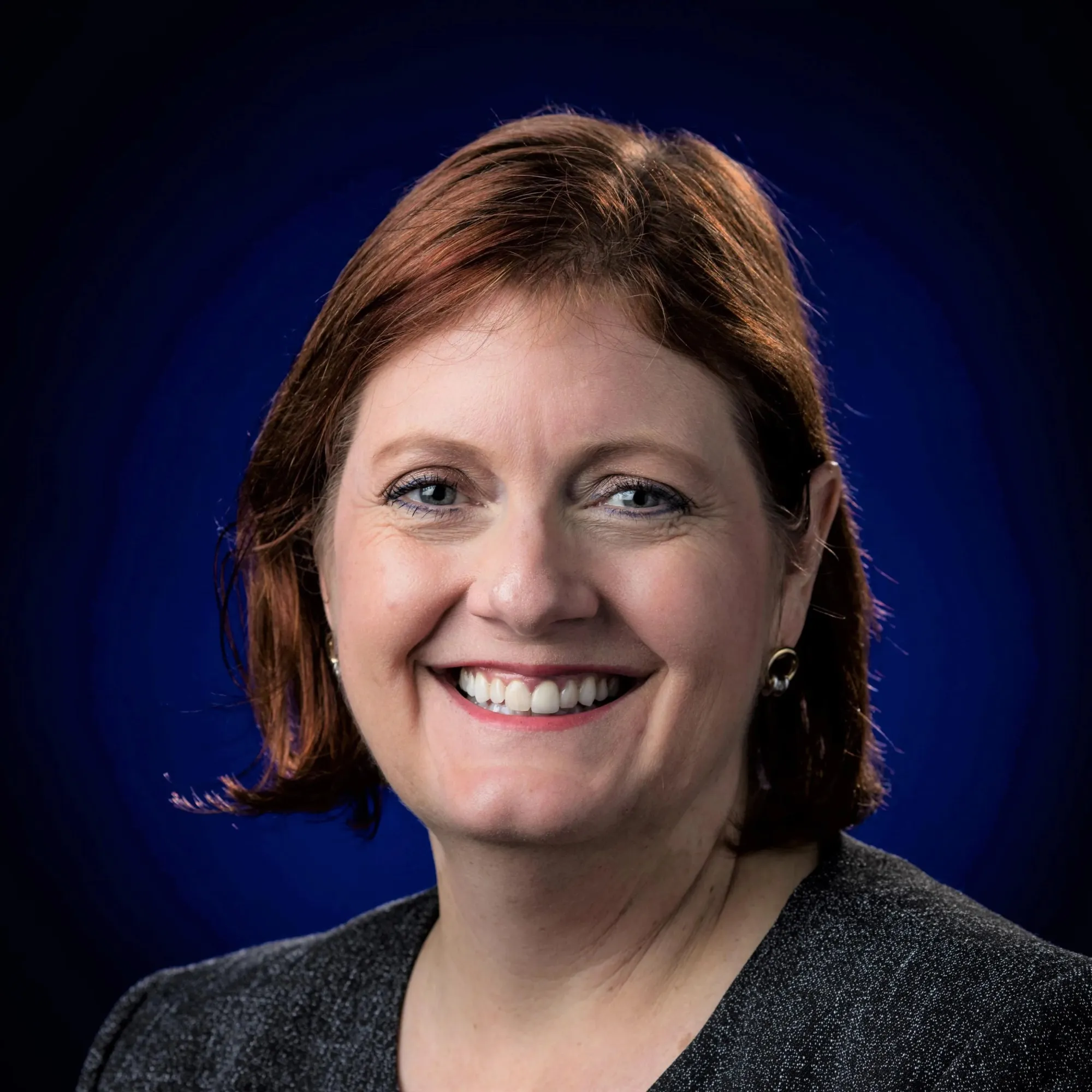
Dr. Julie A. Robinson
Deputy Director for Earth Science
NASA Headquarters
Dr. Julie A. Robinson is Deputy Director for Earth Science at National Aeronautics and Space Administration (NASA) Headquarters in Washington, DC. In this role, she supports the director in overall management for the entire agency’s Earth Science portfolio, including, research and applications, data access, technology, mission development and operations. NASA’s Earth Science mission is to understand our changing planet including the development of the new Earth System Observatory—a set of five satellite missions to provide critical data on climate change, severe weather and other natural hazards, wildfires, and global food production.
Dr. Robinson has an interdisciplinary background in the physical and biological sciences. Her professional experience has included research activities in a variety of fields, including virology, analytical chemistry, genetics, statistics, animal behavior, field biology, Earth science and remote sensing. She earned a B.S. in Chemistry and a B.S. in Biology from Utah State University in 1989 and Ph.D. from the University of Nevada Reno in 1996. Prior to joining NASA in 2004, Robinson began her career with Lockheed Martin as a NASA-funded Earth Science Applications investigator. Her research focused on coral reefs, conservation biology and urban change while she also trained the first NASA-Mir and ISS astronauts to understand and communicate their observations of our changing planet as they conducted longer missions in orbit.
She has received numerous accolades for her scientific leadership and mentorship, including commencement speeches and distinguished lectures, an honorary Doctor of Science from Utah State University in 2021, the Samuel Abraham Goudsmit Medal from the University of Nevada in 2020, and the NASA Outstanding Leadership Medal in 2011.
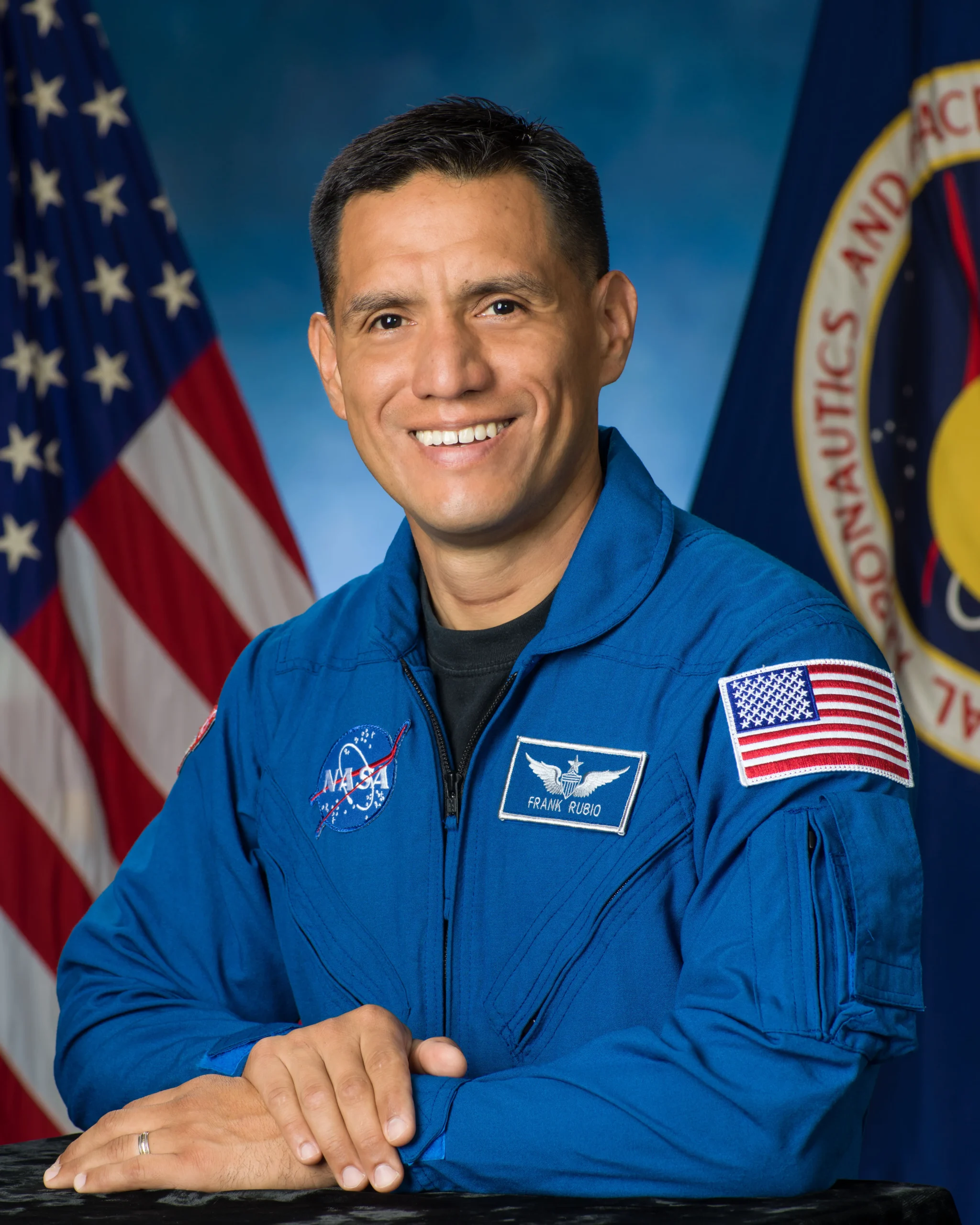
Dr. Frank Rubio
NASA Astronaut
Dr. Frank Rubio was selected by NASA to join the 2017 Astronaut Candidate Class. He reported for duty in August 2017. Prior to joining NASA, the Florida native graduated from the U.S. Military Academy in 1998 and earned a Doctorate of Medicine from the Uniformed Services University of the Health Sciences in 2010. Prior to attending medical school, he served as a UH-60 Blackhawk helicopter pilot and flew more than 1,100 hours, including more than 600 hours of combat and imminent danger time during deployments to Bosnia, Afghanistan, and Iraq. Dr. Rubio is a board-certified family physician and flight surgeon. At the time of his selection, he was serving in the 10th Special Forces Group (Airborne) at Fort Carson, CO.

Dr. David Rutishauser
Processors Technical Discipline Lead
NASA Johnson
Dr. David Rutishauser is The Processors Technical Discipline Lead for Johnson Space Center’s Engineering Directorate. He is currently on detail to the Space Technology Mission Directorate (STMD) supporting the leadership team in the formulation of the avionics portfolio. Dr. Rutishauser also serves as the avionics lead for the Safe and Precise Landing- Integrated Capabilities Evolution project, is member of the Sensor Open Systems Architecture (SOSA) space subcommittee, is a Command and Data Handling requirement owner supporting the European Space Agency Low-Earth Orbit Cargo Return Service program, serves as the Lead for the NASA Engineering Safety Center (NESC) Avionics Architecture Community of Practice, and serves as a program co-chair for the Space Computing Conference. Prior to these roles he was the Assistant Deputy Chief Engineer for the Commercial Crew Program, Systems Engineering and Integration (SE&I) Lead for the Autonomous Landing and Hazard Avoidance Technology (ALHAT) project and worked in the Space Shuttle Flight Software Office supporting the program’s final 17 missions. Before coming to JSC, Dr. Rutishauser worked at NASA Langley Research Center in aircraft wake vortex spacing research and at Raytheon Missile Systems Company as a software/simulation and digital design engineer. Dr. Rutishauser holds a Bachelor’s degree in Electrical Engineering from the University of Dayton, a Master’s degree in Electrical and Computer Engineering from the University of Arizona, and a Ph.D. in Computer Engineering from Virginia Polytechnic Institute and State University. His dissertation work was in the area of high-performance reconfigurable computing.

Dr. Bhanu Sood
Acting Chief Technologist
NASA Goddard
Dr. Bhanu Sood strategically manages NASA Goddard’s Internal Research and Development (IRAD) program that invests in advanced technologies for NASA’s future science and exploration missions. In this role, Dr. Sood develops and infuses innovative aerospace technologies through extensive partnerships across NASA Centers, commercial industry, and academia, working closely with Goddard’s three strategic focus areas, division technologists and Goddard’s technology community. He facilitates cross-Center collaboration through agency-wide investment mechanisms and actively champions technology transition pathways that connect early research to flight projects and commercial applications. During his NASA career, he has served in technical leadership roles supporting multiple missions including JWST, RST, PACE, JPSS and LANDSAT. Prior to joining NASA, Dr. Sood led partnerships with global electronics industry participants at the University of Maryland’s Center for Advanced Life Cycle Engineering, advancing microelectronics development across complex supply chains. His contributions have been recognized with NASA awards, and he holds multiple patents in the field. Dr. Sood holds a doctorate in electronics reliability, master’s degrees in materials science and advanced materials processing, and a bachelor’s degree in mechanical engineering.
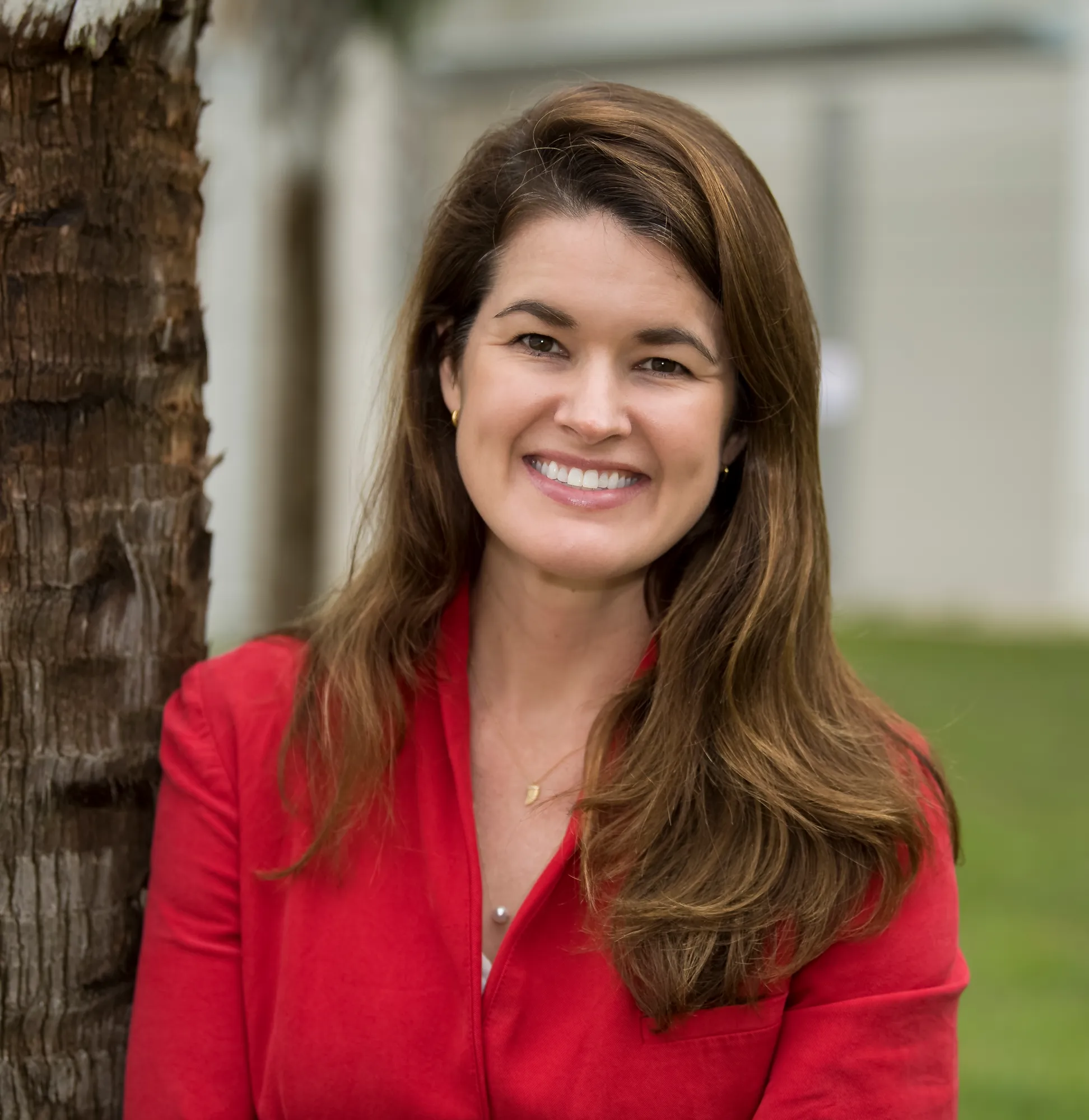
Casey Swails
Deputy Associate Administrator
NASA Headquarters
Casey Swails is NASA’s deputy associate administrator, serving as the agency’s deputy chief operating officer for more than 18,000 employees and an annual budget of more than $25 billion. She is the deputy and principal advisor to the associate administrator for overall day-to-day operations and long-term strategic direction across NASA’s 10 field centers, mission directorates, and staff organizations. She establishes the overall strategy, framework, and structure for NASA’s integrated mission support portfolio and builds and advances the agency’s industry partnerships.
In addition, she is leading NASA 2040, the agency’s strategic initiative to ensure NASA remains the preeminent institution for research, technology, and engineering to lead science, aeronautics, and space exploration for humanity in the year 2040.
Swails holds a Bachelor of Science in management from the Georgia Institute of Technology and a Master of Business Administration from Duke University, and she has completed executive education at Harvard Business School and INSEAD. She was recognized as one of Georgia Tech’s 40 Under 40 distinguished alumni and serves on the board of trustees for the Georgia Tech Alumni Association. Swails is a member of the International Women’s Forum and was selected for the 2022-2023 leadership fellows class. Her work has garnered several awards, including the Gears of Government Award, the NASA Outstanding Leadership Medal, the NASA Silver Achievement Medal, the Silver Snoopy Award, the Johnson Space Center Director’s Innovation Award, and the 2024 Presidential Rank Award.
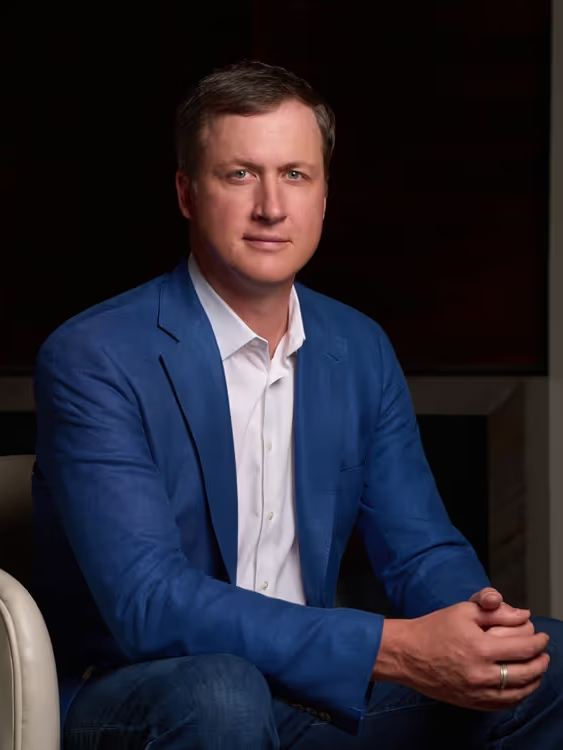
Josh Wilson
Chief Executive Officer
LMI
Josh Wilson is the incoming Chief Executive Officer of LMI. He brings more than 15 years of experience in defense, consulting, and technology leadership, including 11 years at LMI, where he has played a central role in the company’s growth and transformation.
Prior to his appointment as incoming CEO, Wilson served as President of Markets, Growth & Technology, overseeing LMI’s customer portfolio, growth strategy, and research and development. In this role, he helped establish LMI’s digital and analytics capabilities and reorganized the technology function to accelerate innovation and deliver commercial-grade, mission-ready solutions across defense, civilian, and space markets. Previously, as Executive Vice President of Service Lines and Technology, Wilson managed LMI’s offering development lifecycle from concept to deployment and integrated LMI’s advisory, logistics, and digital and analytic solutions to design scalable customer offerings.
Before joining LMI, Wilson served as a U.S. Army officer, completing two overseas tours in Iraq focused on infrastructure reconstruction. Following his military service, he joined Deloitte’s public sector practice, where he specialized in analytics-driven business transformation and strategic planning.
Wilson serves on the Board of Advisors for the Armaments Research Company and for the Greg and Camille Baroni Center for Government Contracting at George Mason University’s School of Business. Josh graduated from the U.S. Military Academy at West Point and holds undergraduate and graduate degrees in engineering.
Organizing Committee
General Chairs
Ashok Prajapati
Romae Young
Technical Program Committee Chair
Mark Walters
Web Chairs
Michelle Belleville
Ariel Walker
Edelina Rose (Aerospace)
Operations Chairs
Tom McConnell (LMI)
Keegan Moore
Dylan Baker
Advisory Committee
Chair – Tim O`Brien (Aerospace Corporation)
Members – Jonny Pellish, Shrolles Ray, Max Pinchinat, Ken Wagner, Kendra Cook, James Curbo (APL), Joseph Trujillo (AFRL), Samuel Jero (MIT/LL), Chris Jenkins (SNL), Kevin Gilbert (Aerospace), Bettina Kolleda (LMI), Nicholas Zappola (LMI), Karen Payne (LMI), Melanie Glenn (LMI), Andrew Filewicz, Rene’ Pitts
Visitor’s Guide
Transportation (Public)
METRO RAIL SILVER LINE
Two Silver Line metro stops are near 7940 Jones Branch Drive: McLean and Tysons Corner.
The McLean stop provides the most convenient access, with a walk of less than a mile along safe paths and sidewalks.
For more information on each Silver Line stop, visit the WMATA Trip Planner on the official Metro website.
BUS SERVICE
The Fairfax Connector Route 424 stops directly in front of LMI and provides convenient access to nearby metro stations, including the North Tysons area, Spring Hill, and Tysons Corner.
Please note that exact fare is required, as drivers do not carry change.
For additional details and schedules, visit the Fairfax Connector website.
Transportation (Driving)
From North or South: From I-495, take exit 46B (Rt.123 North toward Chain Bridge Rd). At the second traffic light, turn left onto Scotts Crossing Rd. After crossing the overpass, turn right onto Jones Branch Drive. LMI HQ is on the right.
From East: On US-7/Leesburg Pike, turn right onto Towers Crescent Drive. Turn left onto Ring Road and continue onto Tysons One Place. At the light, take a slight right onto Westpark Dr. After crossing the overpass, take another slight right to stay on Westpark Drive and take the first right onto Jones Branch Drive. LMI HQ is on the right.
From West: On US-7/Leesburg Pike, turn left onto Spring Hill Road, and continue onto Jones Branch Drive. LMI HQ is on the left.
From I-267:Take the Spring Hill exit onto International Drive and turn left onto Jones Branch Drive. LMI HQ is on the left.
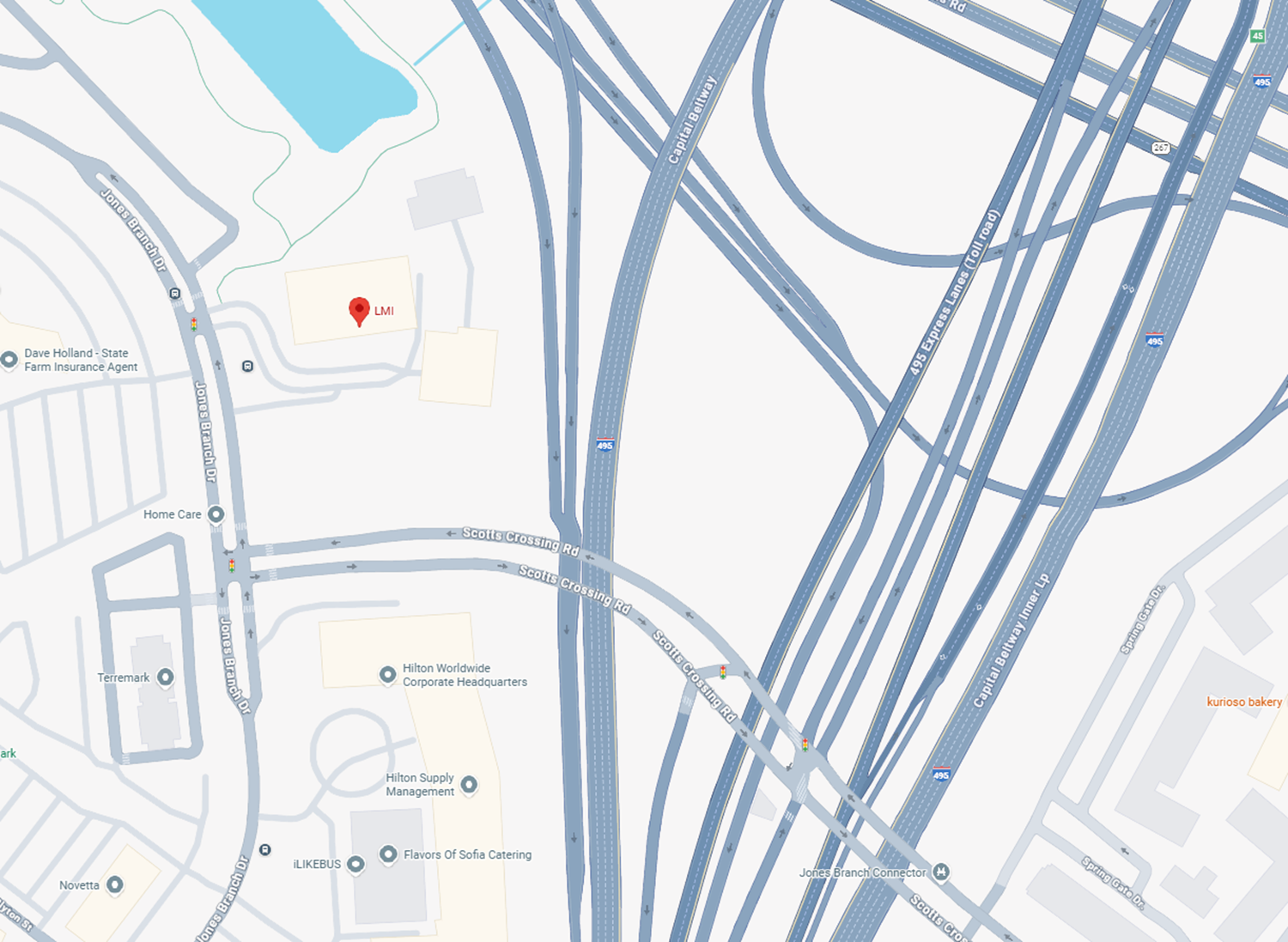
Parking
Parking at LMI is ample, covered, and free. LMI visitors are welcome to park in any LMI-marked space in the parking garage. Reception and security badging are generally located on the Terrace Level; however we will plan for event check-in on the 1st floor.
The primary building entrance for LMI visitors is on the Terrace level on the north side of the building facing the pond. A covered walkway on the Terrace level connects the parking garage to the LMI entrance.
To enter LMI using our private Terrace-level entrance, park on the lower level (LL) or use the
parking garage’s North Elevator/Staircase. Upon entering the North Elevator/Staircase, proceed to LL. Attendees can then walk up the staircase to event check-in on the 1st floor.
After exiting, you will see LMI’s entrance on your right. If you prefer to enter the building from its main entrance (and not LMI’s private entrance), use the South Elevator/Staircase. You will exit Level 1 of the parking garage and walk to the building’s main, public entrance. Upon entering the building, follow the signage for event check-in on the first floor.

Hotels
*Verify government rate availability by contacting the hotel directly or checking through official booking channels (FedRooms/agency travel system).
Hilton McLean Tysons Corner
- Address: 7920 Jones Branch Dr, McLean, VA 22102
- Approximate distancer: ~0.2 mi (walk ~4–6 min; drive ~1–3 min)
- Government per diem assessment: Hilton explicitly markets US government per diem rates (ID required).
Hyatt Regency Tysons Corner Center
- Address: 7901 Tysons One Pl, Tysons, VA 22102
- Approximate distance: ~1.0 mi (walk ~18–25 min; drive ~5–10 min)
- Government per diem assessment: Hyatt has a published government rate program for eligible government/military personnel (ID required).
Courtyard by Marriott Tysons McLean
- Address: 1960-A Chain Bridge Rd, McLean, VA 22102
- Approximate distance: ~0.8 mi (walk ~15–20 min; drive ~4–8 min)
- Government per diem assessment: Marriott offers government rates with eligibility requirements. Courtyard Tysons McLean is shown offering Government Rate / Govt Military (ID required).
DoubleTree by Hilton McLean Tysons
- Address: 1960 Chain Bridge Rd, McLean, VA 22102
- Approx distance: ~0.8 mi (walk ~15–20 min; drive ~4–8 min)
- Government per diem assessment: Hilton broadly offers government per diem rates. DoubleTree McLean Tysons is shown offering Per Diem-type rates (e.g., “Per Diem Plus”).
The Watermark Hotel
- Address: 1825 Capital One Drive South, Tysons, VA 22102
- Approximate distance: ~1.2 mi (walk ~22–30 min; drive ~6–12 min)
Archer Hotel Tysons
- Address: 7599 Colshire Dr, Tysons, VA 22102
- Approximate distance: ~1.0–1.3 mi (walk ~20–30 min; drive ~6–12 min)
- Government per diem assessment: Archer’s reservation flow explicitly lists a “Government Federal” special rate option.
Hilton Garden Inn Tysons Corner
- Email: eric.stein@hilton.com
- Address: 8301 Boone Blvd. Vienna, VA 22182
- Phone number: 703-760-9777
- Fax: 703-760-9780
Gallery




PAST EVENT
2025 NASA cFS Symposium
The 2025 NASA core Flight System (cFS) Symposium is taking place at the NASA Goddard Flight Space Center’s Greenbelt campus. This year’s theme is cFS 2.0 and Government Partnerships. We are excited to bring together leading experts and passionate individuals to explore the latest advancements in cFS.
Join the cFS team for an inspiring symposium featuring dynamic keynote speeches, engaging panel discussions, and valuable networking opportunities. This event is crafted to cultivate collaboration and spark innovation. Your insights and contributions are essential to our conversations. Don’t miss this chance to connect, share ideas, and be part of something truly impactful.
Goals for the 2025 cFS Symposium are:
- Connect with government agencies.
- Provide networking opportunities.
- Seek innovative ideas to improve cFS.
- Discuss flight software challenges and impacts.
The symposium will feature individual presentations, panel discussions, and networking opportunities designed to foster collaboration and innovation. We believe your insights would greatly contribute to the event. Registration will open soon and a call for abstracts will be sent as well.
The symposium will be held at the CUI//FEDCON level. Attendance is restricted to U.S. citizens only. We look forward to welcoming you to what promises to be an engaging and inspiring event!
For questions, please contact cfs-symposium@lists.nasa.gov.
Date: Jan 29, 2025
Time: 8:00AM – 5:30PM EST
Location: GSFC Building 34, Room W150
NASA Goddard Space Flight Center,
8800 Greenbelt Rd., Greenbelt, MD 20771
Symposium Chair: Dr. Ashok Prajapati, NASA cFS Program Manager
Co-Chair: Romae Young, Associate Branch Head, Flight Software Systems Branch (582)
Agenda
| Start Time | Duration (Minutes) | Item | Person | Organization | Title |
| 8:00 AM | 30 | Check-in | cFS Team | NASA Goddard | Refreshments |
| 8:30 AM | 30 | Kick-off | Dr. Ashok Prajapati / Steve Hughes | NASA Goddard | cFS Overview and Strategic Vision |
| 9:00 AM | 15 | Welcome to NASA Goddard | Cynthia Simmons | NASA Goddard | Center Vision by Center Leadership |
| 9:15 AM | 10 | ETD Welcome Address | Matthew Ritsko | NASA Goddard | ETD Vision by Engineering and Technology Directorate Senior Leadership |
| 9:25 AM | 5 | Partnership | Dr. Jonny Pellish | NASA Goddard | Strategic Partnership Remarks |
| 9:30 AM | 30 | Keynote | Dr. Prasun Desai | NASA HQ | High Performance Spaceflight Computing (HPSC) – Enabling the Next Generation of Missions |
| 10:00 AM | 15 | Coffee Break/Picture | Outside Snackbar | ||
| 10:15 AM | 25 | 25-cFSS-Reg-01 | Robin Onsay | NASA Johnson | CGUL – A Modular Approach to cFS |
| 10:40 AM | 25 | 25-cFSS-Reg-02 | Roberts Kalnins | APL | Methodology for Introducing Rust Interoperability with Heritage cFE-based and cFS Applications using Library Crates |
| 11:05 AM | 25 | 25-cFSS-Reg-03 | Matthew McCaskey | NASA Goddard | The Regenerative Fuel Cell Project – An Example of cFS with Electronic Data Sheets (EDS) Support |
| 11:30 AM | 25 | 25-cFSS-Pnl-01 | Moderator – Kevin Gilbert | NASA Goddard | Panel – Space Cybersecurity (Kevin Presents NASA Cyber requirements to set the stage) |
| 12:00 PM | 60 | Lunch (BYOL) | |||
| 1:00 PM | 25 | 25-cFSS-Reg-04 | Aaron Woodard | ARC | Dynamic DDS App |
| 1:25 PM | 25 | 25-cFSS-Reg-05 | Wes Powell / Dr. Ashok Prajapati | NASA Goddard | The High Performance Spaceflight Computing (HPSC) processor and cFS Integration |
| 1:50 PM | 25 | 25-cFSS-Reg-06 | Juliana Furgala | MIT/LL | Magnetite and its Applications: An Embedded RTOS in Support of Secure Software and High-Assurance Space Crypto |
| 2:15 PM | 30 | Open Session | All | ||
| 2:45 PM | 25 | 25-cFSS-Reg-07 | Rich Landau | NASA Goddard | Rethinking the Core: Incorporating Rust and Data Distribution Service in cFS |
| 3:10 PM | 15 | Coffee Break | Outside Snackbar | ||
| 3:25 PM | 25 | 25-cFSS-Reg-08 | Sterling Peet | Georgia Tech | Tackling the cFS Learning Curve with a Hands-on Context Project |
| 3:50 PM | 25 | 25-cFSS-Reg-09 | Russel Waymire | SNL | Sandia’s Space Cyber Testing & Capabilities |
| 4:15 PM | 25 | 25-cFSS-Reg-10 | James Curbo | JHU/APL | Attack Surface Analysis for Spacecraft Flight Software – JHU/APL |
| 4:40 PM | 20 | Closing Remark | Dr. Ashok Prajapati / Steve Hughes |
Keynote

Dr. Prasun Desai
Deputy Associate
Administrator — STMD
NASA HQ
Dr. Desai has worked at NASA for 35 years. For the past 15 years, he has helped to establish the Space Technology Mission Directorate (STMD) from inception at NASA Headquarters for development of next-generation space technologies and capabilities under a $1.1 Billion budget. Over those 15 years, Dr. Desai served in many positions within STMD, last being as the Deputy Associate Administrator. Prior to that, he spent 20 years at NASA Langley Research Center as a senior systems engineer applying expertise in the fields of atmospheric flight dynamics, systems optimization, engineering of entry systems, flight operations, and design of planetary exploration mission elements for robotic and human systems. Dr. Desai has contributed to the design, development, analyses, and flight operations of many NASA missions (Mars Exploration Rover, Stardust, Genesis, Mars Phoenix Lander) pertaining to entry, descent, and landing of probes at Mars and Earth.
Dr. Desai has received numerous awards from NASA for his work including: a Presidential Rank Award; two Exceptional Engineering Achievement medals; an Exceptional Achievement medal, Outstanding Leadership Medal; an Exceptional Service Medal; and was also selected as the 2005 National Engineer of the Year Award from American Institute of Aeronautics and Astronautics.
Dr. Desai has a B.S. in Mechanical Engineering from Rutgers University, an M.S. in Astronautics from the George Washington University, and a Ph.D. in Aerospace Engineering from the University of Illinois.
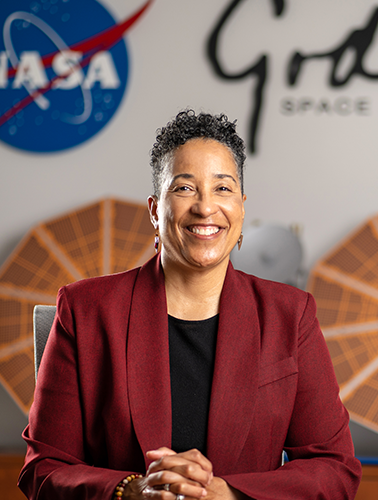
Cynthia Simmons
Deputy Center Director
NASA Goddard
Ms. Simmons’ career began in 1982 as a U.S. Air Force 2nd Lieutenant in the Office of Special Projects; and was distinguished with the Air Force Meritorious Service Medal with recognition by the Under Secretary of the Air Force for an innovative operational concept that enabled faster and more efficient national defense threat assessment. After the Air Force, she worked at Unisys Corp; and then for the Iridium Program supporting launches of 82 satellites within one year receiving awards for her design of a new on-orbit assessment technique for a Low Earth Orbit, multi-satellite, cross-linked constellation with 24/7continuous real-time downlinked data. From 2000 to 2009, she was an engineer for international and DARPA missions in addition to supporting Goddard missions including GOES L/M/O/P, Lunar Reconnaissance Orbiter (LRO), Global Precipitation Measurement GPM) and Sample Analysis at Mars (SAM). In March 2010, she was selected as Instrument Project Manager for DESDynI; Astro-H/Soft X-ray Spectrometer (SXS) in 2011; and then in 2013 for ICESat-II/ATLAS. More recently, she was Code 550 Division Chief and then Deputy Director for Planning and Business Management, successively, in the Engineering & Technology Directorate and Flight Projects Directorate. April of 2021, she was selected for the Deputy Director of the Flight Projects Directorate (FPD) at NASA’s Goddard Space Flight Center. In her career, she has supported 21 launches for NASA, DoD and industry. She is a Women@NASA Honoree (2014), Goddard Senior Fellow and 2016 Samuel J. Heyman Service to America Medals (Sammies) nominee for her contributions to the country. She has received several NASA awards and honors including Agency Honor Silver Achievement Award, several NASA Exceptional Achievement Awards and Robert H. Goddard Leadership Honor Award for her leadership of instrument projects.
She has a Bachelor of Science from the U.S. Air Force Academy and Master of Engineering from the University of Maryland College Park in Aerospace Engineering; and is currently pursuing a PhD in Applied Mathematics at the University of Maryland Baltimore County.
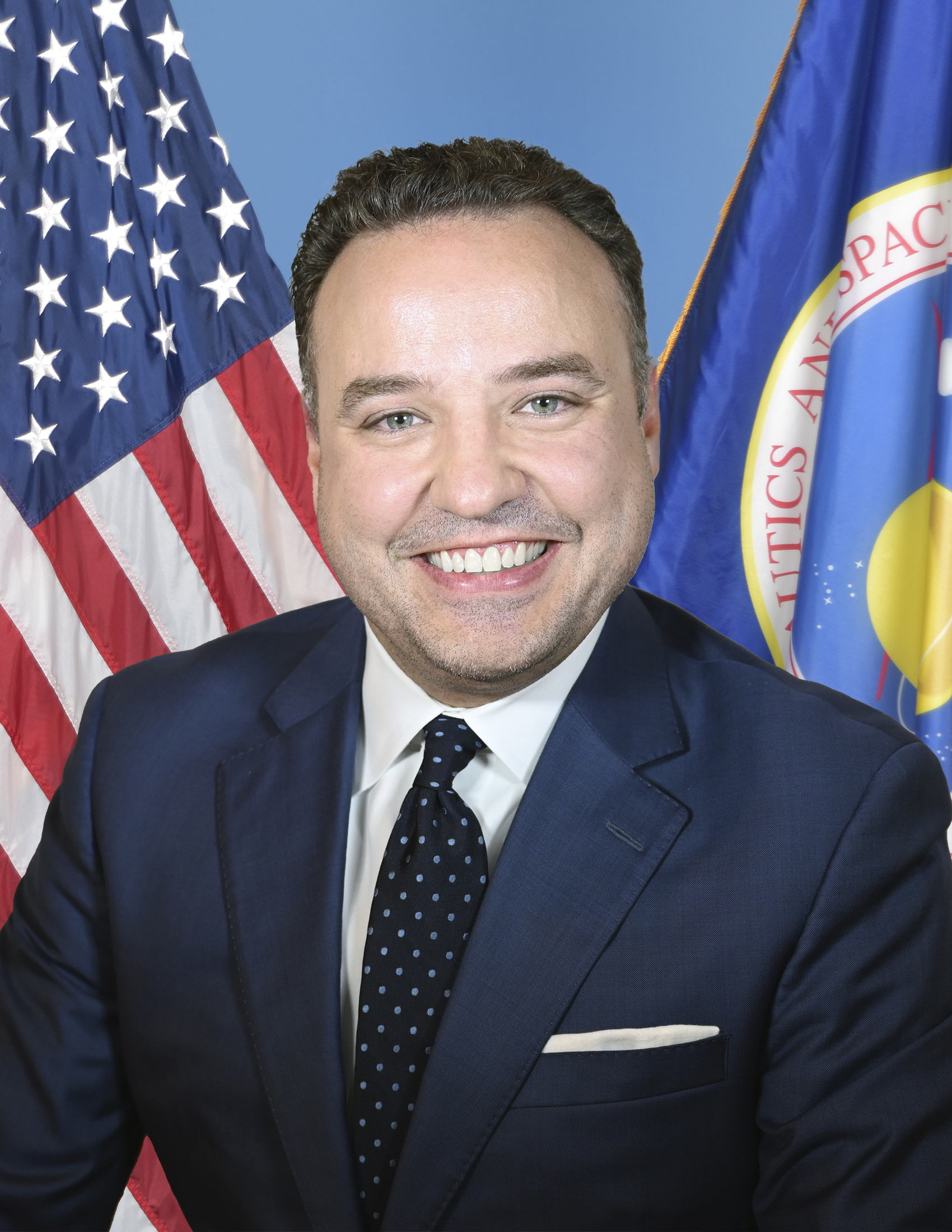
Matthew Ritsko
Deputy Director for Planning and Business Management
NASA Goddard
Matthew Ritsko is the Deputy Director for Planning and Business Management within the Engineering and Technology Directorate at NASA’s Goddard Space Flight Center (GSFC). Matt provides infrastructure, human capital and resources management to NASA’s largest engineering organization.
Prior to this role, Matt served as the Deputy Director for Planning and Business Management within GSFC’s Flight Projects Directorate. Matt provided program planning and control (PP&C) leadership and guidance to spaceflight missions. He enhanced project and improved cost reporting and assessments for the portfolio of 80 missions.
From 2020 until 2022, Matt served as the Chief of Resources Management within the Office of the Chief Financial Officer (OCFO). In this role, he provided leadership to resources management functions supporting multiple mission directorates and GSFC facilities. Matt also served as Goddard’s lead for Program Planning and Control (PP&C). From 2017 until 2020, Matt was the Program Business Manager for the Joint Polar Satellite System (JPSS); a collaborative program between the National Oceanic and Atmospheric Administration (NOAA) and NASA for next generation environmental satellites. From 2013 to 2018 Matt was the Deputy Project Manager for Resources on the Transiting Exoplanet Survey Satellite (TESS) Project; an exoplanet discovery mission to find nearby new planets. Matt started his NASA career in 2005 in resources analyst. He supported the OCFO Program Analysis Office, the Tracking and Data Relay Satellite (TDRS), the James Webb Space Telescope (JWST), and the Gravity and Extreme Magnetism SMEX (GEMS) projects.
Matt has been twice honored as a recipient of NASA’s Outstanding Leadership Medal, NASA’s Exceptional Service Medal, as well as the Robert H. Goddard Award of Mission and Enabling Support. He has been recognized on several NASA Group Achievement and NASA Silver Achievement Medal group awards. Matt holds a Bachelors of Science in Economics from the Pennsylvania State University and a Masters of Business Administration from the University of Maryland. He has a certificate in Systems Engineering from MIT and Project Management from Georgetown University.
Dr. Jonny Pellish
Executive Lead for Strategic Partnerships
NASA Goddard
Since June 2024, Dr. Pellish has served as the NASA GSFC Senior Engineer – Microelectronics and the Executive Lead for Strategic Partnerships, actively engaging with other federal agencies to make more informed decisions, cooperate in scientific research, and pursue partnerships that further national interests. Prior to his current role, Jonny was assigned to the White House National Space Council as the Director of Civil Space Policy. While there, he was responsible for advising the Council’s Executive Secretary, the Vice President, and the President on development and implementation of national policies and strategies for space.
Before the National Space Council, Dr. Pellish served as a fellow on the U.S. Senate Committee on Commerce, Science, and Transportation to negotiate and pass the CHIPS and Science Act – which authorized federal research agencies and funded domestic semiconductor development and manufacturing. A NASA engineer since 2008, Jonny spent most of his career focused on radiation effects in microelectronics for space and strategic systems, leading numerous projects and agency-wide programs.
Dr. Pellish received a B.S. in physics, M.S. in electrical engineering, and Ph.D. in electrical engineering from Vanderbilt University. Jonny has authored or co-authored over 80 refereed publications and delivered numerous presentations on aerospace microelectronics and space policy topics. He is a senior member of the Institute of Electrical and Electronics Engineers and a member of the American Institute of Aeronautics and Astronautics.
Cyber Panel
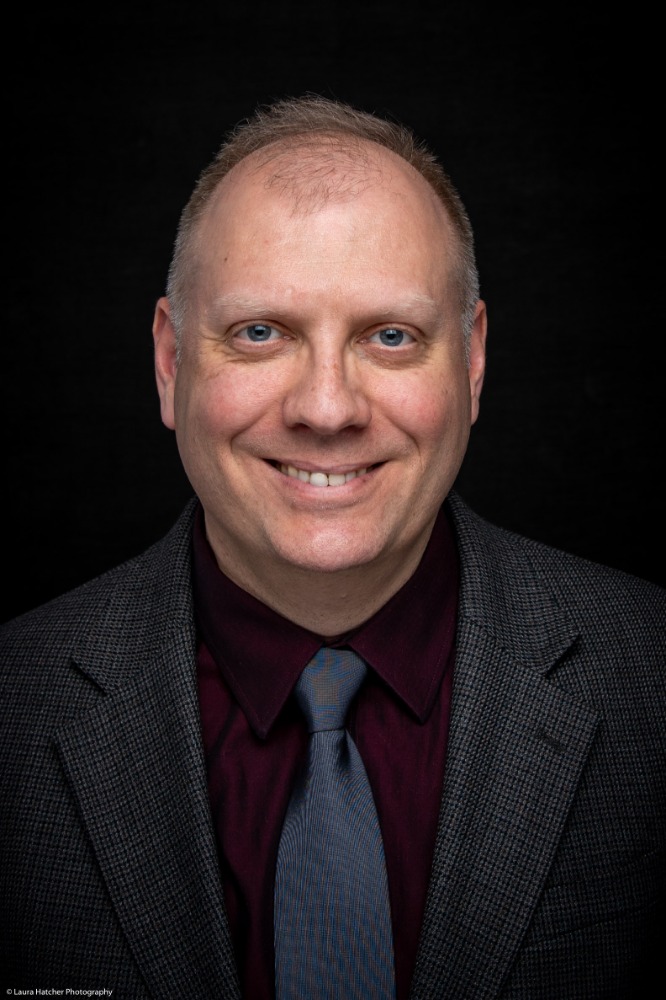
Moderator:
Dr. Kevin Gilbert
Adv. Tech. Lead — MRPP
NASA Goddard
Dr. Kevin Gilbert is lead for advanced technology in the Mission Resilience & Protection Program at NASA’s Goddard Space Flight Center where he is responsible for supporting protection planning activities across the center as well as evaluating research & development efforts to improve the protection posture of civil space flight missions. He is retired from the US Air Force and holds Bachelors and Masters degrees in Mechanical Engineering from the Rose-Hulman Institute of Technology and a PhD in Materials Science & Engineering from the Air Force Institute of Technology. He is also an Associate Fellow of the American Institute of Aeronautics and Astronautics.
Panel Member:
Joshua Krage
Enterprise Space Protection Officer
NASA HQ
Joshua Krage joined NASA in 2001 at the Goddard Space Flight Center, where he established a leading network security monitoring and incident response capability, and went on to become the center’s first Chief Information Security Officer in 2009. In 2012, the NASA Program Management Council approved the charter for the NASA Space Protection Working Group and Joshua served as a founding member for its full span. Joshua started directly supporting the NASA Office of Chief Engineer’s Space Asset Protection Program in 2017 (later renamed the Mission Resilience and Protection Program), and as of December 2024 is now serving as the NASA Enterprise Space Protection Officer.
Panel Member:
Scott Tashakkor
NESC Deputy SW Tech. Fellow
NASA Marshall
Mr. Tashakkor is currently serving as a Deputy to the NESC Software Technical Fellow. He joined NASA in 2008 after working on his first masters degree on higher order computational fluid dynamics for acoustics, which was funded through a NASA SBIR and being used at Marshall Space Flight Center. In his career he has focused on flight and ground software development, security, verification, and validation. He started out working computational models for launch vehicles and the associated system components. From there he moved into writing the embedded flight software for Space Launch System (SLS) and other systems. He became the lead of Guidance, Navigation, and Control software for SLS. After winning several awards for this work (including a NASA Early Career achievement award), he switched to working ground system software and operations for several years. He then rejoined flight software and expanded working more with the NESC. Mr. Tashakkor has an undergraduate degree in Aerospace Engineering from the University of Illinois Urbana-Champaign, and has two master’s degrees, Aerospace and Computer Engineering. He was born in Decatur, Illinois and resides in Huntsville, Alabama.

Panel Member:
James Curbo
Chief Scientist
JHU APL
James Curbo serves as the Chief Scientist of the Constrained Cyber Solutions Group at the Johns Hopkins University Applied Physics Laboratory. His work lies at the intersection of the cyber and space domains, advancing cybersecurity for space systems and bridging the gap between cyber and space operations.
Previously, James served as a Cyberspace Operations Officer in the U.S. Air Force and later worked at MITRE, focusing on defensive cyber operations for the Department of Defense.
James earned a BS in computer science from Henderson State University in Arkansas and an MS in computer science from Capitol Technology University in Maryland. He is currently pursuing a doctorate at the Johns Hopkins University Whiting School of Engineering, focusing his research on cyber-resilient spacecraft design and implementation.

Panel Member:
Brandon Bailey
Principal Engineer
Aerospace Corp.
Brandon Bailey is a principal engineer for the Cybersecurity and Advanced Platforms Subdivision (CAPS) at The Aerospace Corporation, at The Aerospace Corporation. In this role, Bailey has focused on developing a cyber range to support penetration testing training and in-the-lab evaluation of customers’ implementations, performing vulnerability assessments and penetration testing activities for multiple customers as well as performing cybersecurity research on ground systems and spacecraft systems to better position the federal government with respect to protection of our critical space infrastructure. Bailey has also led the development of the space-focused tactic, technique, and procedures (TTPs) framework called Space Attack Research and Tactic Analysis (SPARTA). SPARTA is intended to provide unclassified information to space professionals about how spacecraft may be attacked. Bailey is a former civil servant at NASA, where he led various cybersecurity efforts and was awarded NASA’s Exceptional Service Medal for his landmark cybersecurity work in 2019. He has extensive experience in the test and evaluation of systems and technology using high-fidelity digital twins with specialization in cybersecurity.
Visitor’s Guide
Greenbelt Campus Visitor’s Guide
Most buildings in GSFC campus are mappable in Google Maps.
Visitor Center Address: NASA Goddard Visitor Center, 9432 Greenbelt Rd, Greenbelt, MD 20771
Non-NASA Attendees:
Park at the Visitor Center Parking and proceed to the Badging Office where a guide will provide badges. After receiving badges, head to Room W150 in Building 34 (parking for all is across B34). Please contact Ashok Prajapati for any additional assistance.
NASA Attendees:
Ensure that Goddard access is granted. If access has not been arranged, visit NAMS to request center access prior to the event.

Gallery


